Case study
Used server auctions: How we found lots other buyers missed
Controllers filed under medical supplies and a 33-server lot that missed its reserve: what we learned watching used IT auctions in October 2026.
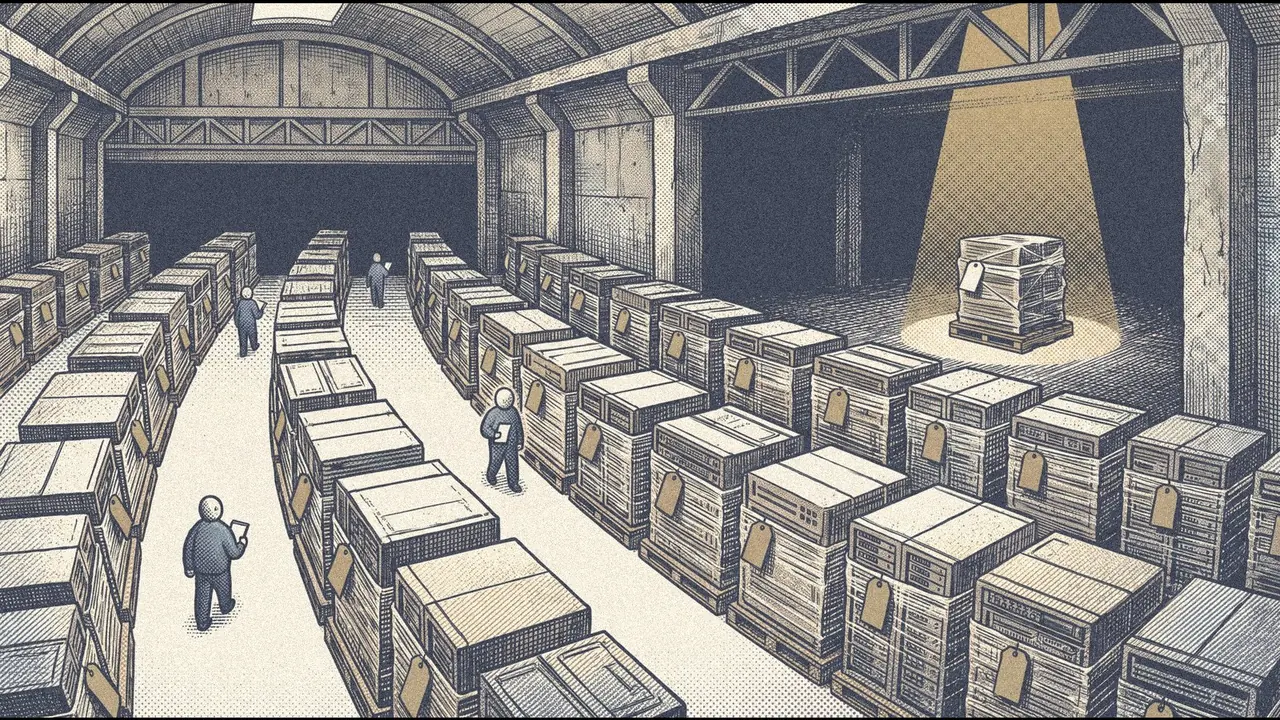

Most buyers of used enterprise hardware watch the same few auction sites and bid on the same well-described lots. In October 2026 we watched more widely and read the manifests line by line. We found equipment listed in the wrong category, lots that closed without a sale, and manifests whose blank fields hid both risk and value.
We can’t say every one of these was a bargain. We didn’t inspect them, and some went unsold for good reasons. But a lot that closes with no bids is one where a prepared buyer can set the price.
Where do these lots show up?
Three patterns showed up again and again.
1. Lots listed where IT buyers don’t look. A lot of Allen-Bradley SLC 500 controller hardware sat in a rural Wisconsin online auction otherwise selling mowers, coins and toy tractors. It was filed under “Medical Supplies / Lab Equipment,” described only as “Logic Controller Modular With Power Supply,” and had no bids.1 Its photos showed racks, power supplies and I/O modules whose model numbers were readable on the labels. Those numbers appeared nowhere in the listing text, so anyone searching for the parts by number would never have turned it up.
2. Lots that close thin. A 33-server Dell lot, mostly R630s, closed on an IT disposal firm’s auction site with its reserve not met.2 A 36-server lot of R630, R730 and R640 machines from the same seller closed at $5,300, about $147 a server.3 A refurbished Dell R740 with 64 GB of memory was listed at $1,050 the same month.4 The gap is wide, though lot prices exclude testing, parts, selling costs and condition, so it isn’t a margin, and the lot units weren’t specified to match that R740.
3. Manifests that hide value in plain sight. Two 60-unit manifests we read line by line looked similar on their listing pages, but one split into 17 distinct configurations. Each left its condition and test columns blank, and one had a memory total that didn’t match its own module count.5 A buyer who prices the whole lot off the headline model gets most units wrong, too high for some and too low for others.
| Pattern | Example | Possible reasons (not verified) |
|---|---|---|
| Wrong category | Controller hardware listed under medical supplies in a mower and coin sale | Not on IT buyers’ sites, and not searchable by part number |
| No sale | A 33-server Dell lot closed with its reserve not met | Too many lots to watch, or too much work to price |
| Thin price | A 36-server Dell lot closed at about $147 a server | Bid count not observed |
| Hidden configuration | 60 servers in 17 distinct configurations | The headline model hides the spread in value |
Source: public auction listings and manifests read in October 2026. We didn’t bid on, inspect or value these lots.
Why does this happen?
Mostly it comes down to attention, since a buyer can only watch a handful of sites and read a few manifests a day. Lots keep appearing across disposal-firm auctions, government surplus, liquidators and general online auctions, each with its own format and terms. Most buyers sensibly stick to familiar sellers and clean listings, and some of the rest clears thin or not at all.
That gap is widening. AI buildouts are pushing data centers to retire hardware, and the 2026 memory shortage has made the parts inside used servers worth more. More supply is arriving in more places, and the prices that matter are moving faster.
How do we find them?
We use software agents that read listings, photos and manifests across a much wider set of sources than a person can. They flag lots that match a buyer’s specific needs, then help a person judge what each one is worth to that buyer.
We won’t describe the method here, but most of the edge comes from covering more sources and reading each listing closely, more than from bidding faster on the lots everyone already sees.
What should a buyer do with this?
Whether or not you work with us:
- Widen where you look. Government surplus and general online auctions list IT equipment under odd categories.
- Read the manifest, not the headline. Group units by configuration, and treat blank condition, test and drive fields as risk to price, not reasons to skip.
- Ask before you pass. A lot with a blank field may be one email away from a confident bid that nobody else makes.
Tell us what you need checked: info@standardtrade.ai.
Common questions
Were the unsold lots bad lots?
Some may have been. A lot can go unsold because of condition, location or pickup terms. We can’t see who looked at a lot. We can see which lots closed unsold or with no bids, and the buyer who prices those first gets the best price on the good ones.
Do you buy these lots yourselves?
No. Our work is for buyers. We find and evaluate opportunities, and the buyer decides what to buy and holds the inventory.
Which equipment do you cover?
We’re starting with used enterprise servers and their components, especially Dell and HPE. We see industrial and networking equipment along the way.
Standard Trade is an AI commerce lab. Our agents do the homework behind a business purchase, so buyers know who to trust and what to pay. For refurbishers, that means reading every line of a lot’s manifest, on auction sites most buyers never open, before the lot closes. Write to us at [email protected].
Get the used-server lot checklist
A free one-page checklist to work through before you bid: the terms to read first, the blank manifest fields to price and the questions to ask the seller. Enter your work email to download it.
We don’t sell the lots we review, and nothing here is a valuation of any specific lot.
Sources
- Public online auction listing, Lancaster, Wisconsin, read October 11, 2026. The lot was open at the time.
- IT asset disposition firm’s auction page for a 33-server Dell lot, “Reserve price not met,” read October 12, 2026.
- The same firm’s auction page for a 36-server Dell lot, winning bid $5,300, read October 11, 2026.
- Newegg Business listing, refurbished Dell PowerEdge R740, 2x Xeon Gold 6130, 64 GB, no drives, read October 11, 2026. neweggbusiness.com
- Public manifests for two used-server auction lots, read October 11, 2026.